
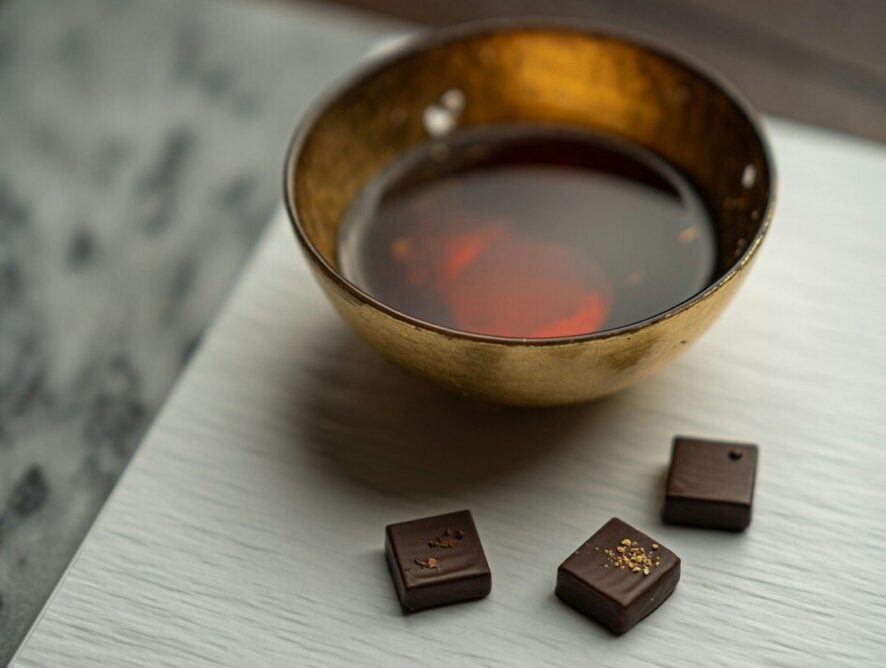
The Botanical Alchemy of Camellia Sinensis and Theobroma Cacao
Pairing fine tea with single-origin dark chocolate is more compelling than a simple exercise in matching sweetness. Both ingredients begin as botanical materials shaped by place, climate, cultivation, fermentation, drying, and heat. The leaves of Camellia sinensis and the seeds of Theobroma cacao carry the signatures of their landscapes, yet those signatures are transformed by human craft. A shaded Japanese tea may express umami, mineral freshness, and tender greens, while a carefully roasted cacao may reveal red fruit, toasted nuts, spice, or dark earth. The pleasure lies in allowing those identities to meet without asking either one to disappear.
Terroir provides the first vocabulary, fermentation builds depth, and roasting gives both tea and chocolate their aromatic architecture. In this context, tannin is not automatically an enemy. The familiar idea of a “tannin clash” usually describes an imbalance, such as a harshly extracted tea beside astringent chocolate. When acidity, bitterness, aroma, and texture are proportioned with care, astringency supplies structure and length. The tasting journey that follows moves from the oceanic freshness of Japanese sencha through floral Taiwanese oolongs, mineral rock tea, and the profound earthiness of aged Yunnan pu-erh.
Understanding Tannins and Polyphenols on the Palate
Astringency and bitterness are related but distinct sensations. Bitterness is a taste detected by receptors on the tongue, while astringency is primarily a tactile impression: a drying, gently contracting sensation caused when polyphenols interact with salivary proteins. Tea contains catechins and other polyphenols, particularly in green and black teas, while cacao contains flavanols and related compounds. The result may feel powdery, grippy, or cleansing rather than simply bitter. A useful scientific discussion of cacao polyphenols, flavanols, and sensory astringency appears in this peer-reviewed research review, while an Authoritative Source provides additional context on their effects.
Chocolate introduces an important counterweight. Its cocoa butter melts close to body temperature, spreading a silky film across the palate and carrying aromatic molecules into the retronasal passage. That lipid richness can soften the immediate impact of tea polyphenols, while tea”s warmth and fluidity help lift the chocolate”s deeper aromas. The combination can therefore create a third profile that belongs to neither ingredient alone: floral cocoa, toasted fruit, mineral creaminess, or a lingering impression of roasted nuts and fresh leaves.
Balance remains essential. Water that is too hot, a steep that is too long, or an excessive leaf-to-water ratio can pull an aggressive concentration of polyphenols from the tea. Such an infusion may make dark chocolate seem dusty, sour, or disproportionately bitter, while the chocolate”s texture becomes less supple. Proper brewing protects the pairing by preserving aromatic clarity and leaving enough saliva on the palate for the cocoa butter to perform its work.
- Bitterness is a taste sensation, while astringency feels drying or contracting.
- Cocoa butter rounds the palate and helps carry chocolate aromas.
- Tea warmth loosens the chocolate”s aromatic profile and refreshes the finish.
- Moderate extraction prevents tea tannins from overwhelming delicate fruit and floral notes.
Processing determines how these compounds are presented. Oolong tea occupies a particularly broad aromatic spectrum because partial oxidation and roasting can move its character from green, creamy florals toward baked fruit, nuts, caramel, and warm wood. The botanical and manufacturing distinctions of oolong are outlined in this authoritative tea reference. In a thoughtful pairing, the goal is not to eliminate polyphenols, but to give them a polished role in the structure of the tasting.
The Three Phase Dynamic Melting Ritual
A successful tea and chocolate pairing benefits from deliberate pacing. The first sip establishes the tea”s temperature, body, fragrance, and finish. The chocolate is then tasted on its own, allowing its texture and origin character to emerge. A second sip acts as a warm aromatic wash, dissolving the remaining cocoa solids and revealing nuances that were hidden during the first encounter.
- Prepare the palate. Take a small sip of tea while it is warm rather than scalding. Around 70 to 78 degrees Celsius is suitable for many delicate green teas, while more robust oolongs can tolerate hotter water. Notice the opening aroma, sweetness, texture, and aftertaste.
- Let the chocolate melt. Place a small square on the tongue without chewing immediately. Allow body heat to release the chocolate”s volatile aromas, then observe how the texture changes from firm and satin-like to fluid and coating.
- Create the dynamic wash. Take a second, smaller sip of tea and let it move across the palate with the melted chocolate. Look for a new middle register, such as jasmine becoming cocoa blossom, red fruit becoming plum, or roasted notes becoming hazelnut.
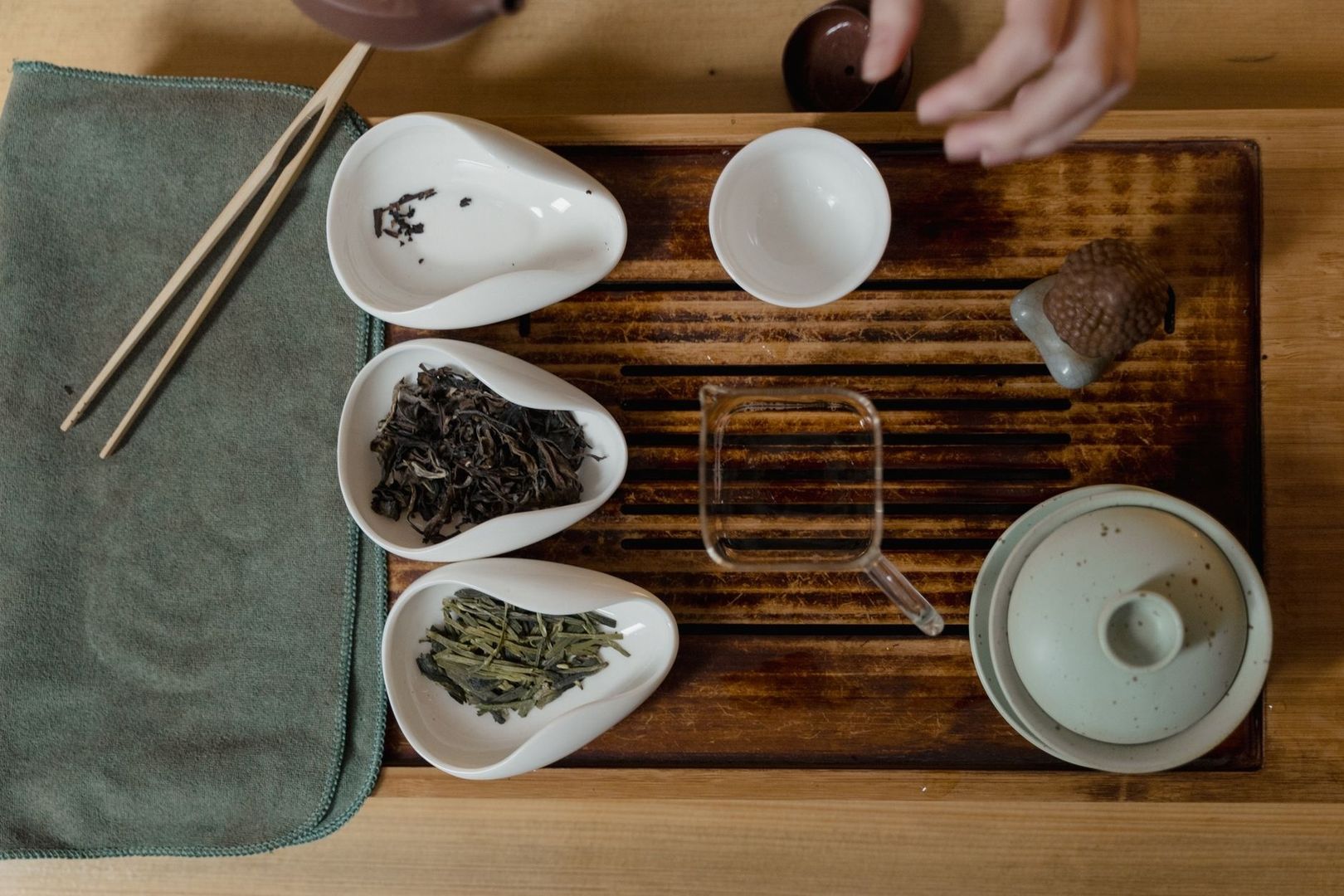
Use a small porcelain cup or clear glass with enough opening to collect aroma, avoiding heavily scented vessels that interfere with the tea. Water temperature should remain consistent across a flight, and a preheated pot or gaiwan helps prevent the first infusion from cooling too quickly. For a more formal tasting, keep the tea slightly less concentrated than usual. The purpose is to leave room for the chocolate rather than to demonstrate the maximum strength of the leaf.
Curated Pairings of High-Mountain Oolongs and Ecuadorian Arriba Nacional
Ecuadorian Arriba Nacional cacao is especially attractive beside Taiwanese oolongs because its fine-flavor profile can combine floral, nutty, creamy, and gently fruity impressions. A lightly roasted Alishan oolong, grown at high elevation, can echo the chocolate”s white-flower and orchard-fruit tones without adding excessive weight. Such a tea often brings a smooth body, sweet pea or floral notes, and a refreshing finish. The high-mountain setting is part of the sensory story: cooler conditions and pronounced day-to-night contrasts can encourage concentration and aromatic finesse.
For a brighter pairing, use a lightly roasted Alishan tea with a dark chocolate in the 70 to 75 percent range. Begin with 4 grams of leaf to 150 milliliters of water at approximately 90 to 95 degrees Celsius, steeping for about two to three minutes, then adjust according to the leaf. A roasted Tieguanyin from Taiwan can be more assertive, offering apricot, hazelnut, toasted grain, and a rich sweet aftertaste. Its roasted character can meet Ecuadorian cacao”s nutty density while giving the finish a polished, almost pastry-like warmth. The intricate processing, withering, partial oxidation, and roasting methods behind this floral spectrum are documented in this agricultural extension guide to oolong tea manufacturing and roasting.
Roasted oolong is particularly useful when the chocolate has earthy or heavily toasted notes. The tea”s caramel and roasted-almond undertones can cut through density, creating contrast rather than duplication. A Muzha-style Tieguanyin may suit a 75 to 85 percent Ecuadorian bar, while a greener Alishan is better with a bar whose acidity and fruit are still prominent. The recommended preparation for a robust roasted oolong is around 4 grams per 150 milliliters at 95 degrees Celsius or higher, with a first infusion near three minutes. Several shorter re-steeps can be preferable to one increasingly bitter, overextended infusion.
- Lightly roasted Alishan with 70 to 75 percent Arriba Nacional for floral, sweet, and orchard-fruit harmony.
- Lightly oxidized Tieguanyin with 70 to 80 percent chocolate for apricot, cream, and fresh floral lift.
- Roasted Tieguanyin with 75 to 85 percent chocolate for hazelnut, caramel, and deeper cocoa structure.
Tasting Profiles Matrix for Single-Origin Cacao and Fine Teas
A tasting matrix is most useful when it identifies both affinity and contrast. Madagascar cacao, for example, is known for vivid red-fruit acidity and can become remarkably elegant beside Japanese sencha. The sencha”s marine freshness, umami, mineral edge, and long finish can make raspberry, cherry, or citrus-like notes in the chocolate appear brighter. Japanese tea specialists often pair chocolate with sencha, gyokuro, and bancha precisely because the tea can reveal nuances that might otherwise remain unnoticed.
Venezuelan Criollo, with its nutty creaminess and restrained aromatic character, benefits from the mineral and roasted structure of Wuyi rock oolong. Aged Yunnan pu-erh takes the pairing in a darker direction. Its earthy, smoky, nutty profile and deep brown liquor can stand beside intense Ecuadorian chocolate, particularly when the bar contains little added sugar and retains a long, dry finish.
| Chocolate origin and character | Tea pairing | Key intersection | Brewing guide |
|---|---|---|---|
| Madagascar, bright red fruit and lively acidity, 65 to 75 percent | Japanese sencha | Berry, citrus, mineral freshness, and umami | 70 to 78 degrees Celsius, 45 to 60 seconds |
| Venezuelan Criollo, creamy, nutty, and softly aromatic, 70 to 80 percent | Wuyi rock oolong | Almond, stone, roast, and lingering mineral warmth | 90 to 95 degrees Celsius, 30 to 60 seconds for multiple infusions |
| Ecuadorian Arriba Nacional, floral, earthy, and nutty, 75 to 85 percent | Aged Yunnan pu-erh | Dark earth, dried fruit, cacao, and forest-floor depth | 95 to 100 degrees Celsius, brief rinsing and 20 to 45 second infusions |
| Dark Ecuadorian cacao, intense cocoa and roasted notes, 80 to 90 percent | Roasted Tieguanyin | Hazelnut, caramel, toasted grain, and a warming finish | 95 degrees Celsius or higher, approximately three minutes initially |
Elevate Your Sensory Ritual at Home
The most rewarding tastings are rarely the fastest. Allow each infusion to cool slightly, break chocolate into small portions, and keep water nearby to reset the palate between pairings. Begin with the most delicate tea and progress toward deeper roasted or fermented styles. A neutral, unsalted biscuit can be useful between flights, but frequent cleansing is often unnecessary because the natural progression of tea and chocolate supplies its own rhythm.
Small micro-batches are ideal for exploration. Choose two or three estate teas and several single-origin bars, recording the harvest or production details, cacao percentage, brewing temperature, and first impressions. An evening flight might begin with sencha and Madagascar cacao, move into Alishan and Ecuadorian chocolate, and finish with pu-erh beside an intense dark bar. In an intimate gathering, serve each pairing in modest portions and encourage attention to the moment when aroma changes, texture softens, and tannin shifts from drying force into an elegant, resonant finish.
