
The Architecture of an Ancient Flavor
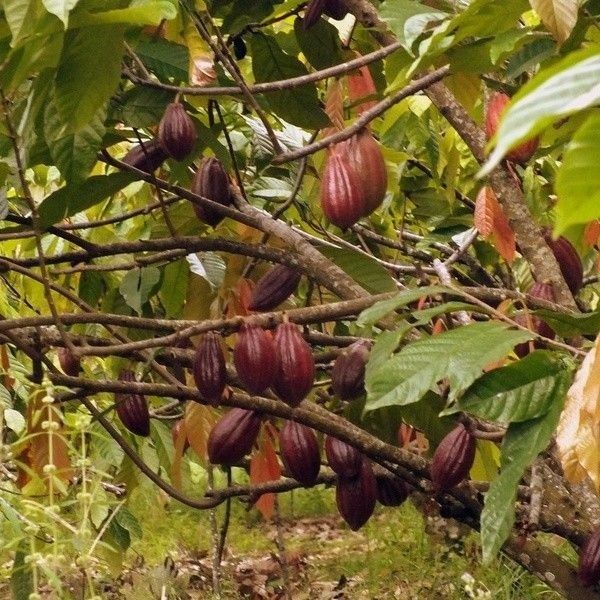
Step beneath a tropical canopy and the first impression is not heat, but orchestration. Light arrives in fragments through broad leaves and high branches, touching cacao trunks, damp soil, fallen fruit, and moss. The air is quieter than an exposed plantation, softened by foliage and animated by the subtle movement of insects, birds, and decomposing leaves. In this cool, dappled world, cacao develops within a living system rather than against it.
That distinction matters because industrial cocoa production has often moved toward full-sun fields planted with uniform, high-yielding hybrids. Such plantations can be efficient in the short term, yet they may demand more irrigation, fertilizers, pesticides, and constant intervention as soils weaken and ecological balances disappear. Traditional heirloom groves offer another model: cacao grows among timber trees, bananas, citrus, native vegetation, and food crops, creating a layered habitat with several forms of value.
Exceptional craft chocolate is therefore more than the result of careful roasting, refining, and tempering. The finished bar carries a memory of its growing place. Its acidity, perfume, texture, and finish reflect genetics, soil, rainfall, shade, fermentation, and the decisions made by farmers long before the beans reached a chocolatier. For discerning connoisseurs, dedicated artisans crafting exquisite boutique confections offer a way to encounter that connection through heirloom beans and ecological stewardship.
Terroir in the Dappled Shade
Shade-grown cacao illustrates terroir in a particularly expressive form. Native canopy trees moderate the intense temperature swings that can stress cacao tissues, while their branches reduce the force of tropical winds. Banana plants can provide rapid, temporary shade, citrus may contribute food and income, and taller timber species establish a more permanent upper layer. The result is not a single uniform climate, but a sequence of small microclimates around each tree.
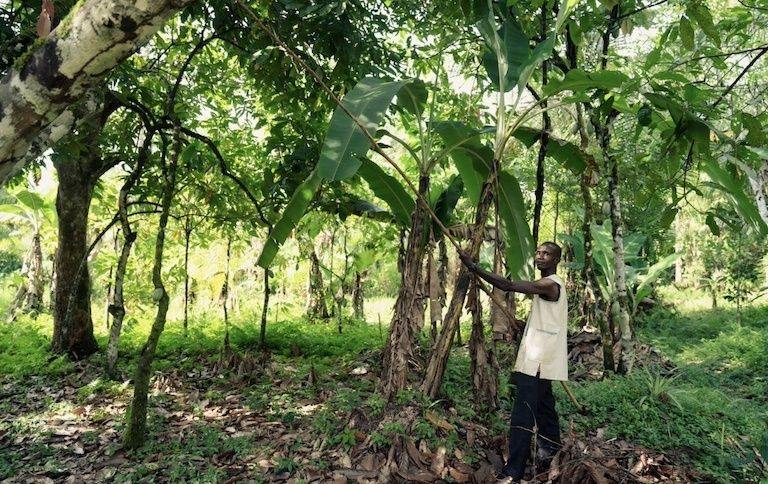
Those conditions influence the pace at which cacao pods develop. When heat and water stress are moderated, maturation can proceed more gradually, giving biochemical precursors time to accumulate and interact. Organic acids, sugars, polyphenols, and aromatic compounds are later transformed during fermentation and roasting. Shade does not guarantee superior flavor by itself, but it can create the stable biological conditions in which distinctive genetics and careful post-harvest work are able to express themselves.
Arriba Nacional from Ecuador is often associated with a graceful aromatic profile shaped by ancient Ecuadorian genetics and regional growing conditions. In well-crafted chocolate, it may suggest red fruit, fresh flowers, toasted hazelnut, and a clean cocoa finish. Native heirloom varieties can show similar complexity, with floral notes appearing as perfume rather than sweetness and fruit acidity remaining bright instead of sharp. These impressions are not proof that every shaded bean will taste alike, but they demonstrate how ecological context can preserve nuance that high-yield uniformity may overlook.
- Upper canopy: Timber and native trees buffer heat, wind, and intense sunlight.
- Middle layer: Banana, citrus, and other useful crops diversify farm income and household food supplies.
- Cacao layer: Shade supports a more stable environment for flowering, pod development, and soil moisture.
- Forest floor: Leaf litter, roots, fungi, and decomposing plant material sustain nutrient cycling.
Sun-Grown Depletion Versus Living Soil Biodiversity
The attraction of full-sun hybrid monoculture is understandable. Uniform trees can simplify management, and varieties such as CCN51 are valued for productivity and disease resistance. Yet the apparent simplicity of a monoculture often transfers complexity into the soil, the chemical program, and the farmer”s long-term risk. Without a diverse canopy, the ground receives more direct heat and rain impact. Organic matter can break down rapidly, erosion can increase, and declining fertility may encourage heavier dependence on external inputs.
Research examining cocoa landscapes has documented the wider environmental tension between forest conservation, full-sun cultivation, and agroforestry. A biodiverse canopy supplies continuous leaf litter, roots occupy different soil layers, and symbiotic mycorrhizal fungi can assist plants in accessing nutrients and water. The resulting soil behaves more like a sponge, absorbing rainfall, holding moisture during dry spells, and releasing nutrients gradually. Agronomic investigations also confirm that canopy shade enhances bean physicochemical and functional characteristics, promoting balanced acidity and desirable biochemical precursors during fruit maturation.
| Indicator | Full-sun monoculture | Multi-tiered agroforest |
|---|---|---|
| Soil cover | Often exposed between rows, increasing heat and erosion risk | Leaf litter and understory vegetation protect the soil surface |
| Moisture | More vulnerable to rapid evaporation and heavy rainfall runoff | Roots and organic matter improve infiltration and water retention |
| Pest resilience | Uniform trees can allow pests or disease to spread rapidly | Habitat diversity can support beneficial insects and ecological balance |
| Farmer income | Concentrated dependence on one crop and one market | Potential income from fruit, timber, food crops, and premium cacao |
| Sensory expression | Consistent, often robust cocoa character with less genetic variation | Greater potential for floral, fruit, nut, and mineral nuance |
Ecuador demonstrates the pressure clearly. Cacao production has expanded dramatically over the past six decades, while only a relatively small share is managed through combined or agroforestry systems. Rising prices can provide welcome income, but they can also encourage plantation expansion, forest clearing, and rapid replacement of lower-yielding Nacional trees. The ancient variety produces less than many hybrids, yet its ecological and sensory value may be considerable when premiums reward quality rather than volume alone.
The Microclimate Buffer Against Global Volatility
The recent cacao market has shown how quickly distant climate events can reach a luxury chocolate counter. Prices rose sharply as major West African producing regions faced crop failures associated with difficult weather and disease pressures. Higher prices may appear to promise relief for farmers, but they can also create incentives to clear additional land or intensify production through uniform hybrids. That response can deepen vulnerability if the next shock arrives through heat, drought, excessive rain, or a new pest.
Agroforestry offers a form of insurance rooted in ecological diversity. A layered farm can slow wind, shade the soil during heat waves, reduce the force of tropical downpours, and provide alternative crops when cacao yields fall. Roots from different species stabilize slopes and improve infiltration, while organic matter helps retain water between rains. The approach does not eliminate climate risk, but it can reduce the severity of each disruption and give a smallholder more than one source of food or income.
The FAO agroforestry framework recognizes multi-species systems as important tools for climate adaptation, resource management, and rural livelihoods. In Ecuador, projects supporting deforestation-free cocoa are combining producer training, vegetation monitoring, traceability, nurseries, demonstration farms, and cooperative development. In 2025, work in Esmeraldas and Manabí included two clonal gardens, five nurseries, and six demonstration farms, while hundreds of farms were registered within a traceability effort. These systems connect ecological care with market access, including the increasingly important requirements of European buyers.
- Erratic rainfall: Leaf litter and diverse roots improve infiltration and reduce runoff.
- Heat waves: Canopy shade lowers exposure at the soil and cacao-tree level.
- Soil erosion: Ground cover and root networks help hold soil in place.
- Market volatility: Fruit, timber, and food crops can diversify household revenue.
- Premium access: Traceable fine-flavor cacao can connect smallholders with specialty chocolate makers.
For farmers in Ecuador and Costa Rica, the premium craft market can make biodiversity financially meaningful. A cooperative that can document origin, farm practices, and canopy management has a stronger story to present to careful buyers. In Turrialba, Costa Rican fine-flavor cacao is linked with regenerative agriculture, farmer support, and chocolate designed to preserve origin character. The most valuable premium is not simply a higher price for a rare bean; it is a mechanism that allows farmers to maintain trees, habitats, and practices that would otherwise be displaced by short-term production targets.
How Connoisseurs Can Taste the Forest
Tasting agroforest cacao requires more attention than reading the cocoa percentage on a wrapper. A 70 percent bar can be elegant or blunt, depending on bean genetics, sugar quality, fermentation, roasting, and formulation. Instead of treating percentage as a complete quality signal, consider the origin, variety, harvest information, producer relationship, and the maker”s approach to roasting. A well-made single-origin bar should reveal progression rather than one-dimensional bitterness.
- Prepare the palate. Taste in a neutral setting, away from coffee, perfume, or strongly flavored foods. Allow the chocolate to reach a cool room temperature, then break a small piece and notice the aroma before tasting.
- Observe the opening. Let the chocolate melt slowly. Look for the character of the first impression: bright citrus-like acidity, red fruit, blossom, toasted nuts, caramel, or deep cocoa.
- Measure the balance. Acidity should give lift without becoming sour. Bitterness can provide structure, while sweetness should frame the flavor rather than cover it. A refined bar often feels layered instead of aggressively intense.
- Follow the middle notes. As the chocolate warms, floral and fruit aromas may emerge beside hazelnut, malt, spice, or gentle earthiness. This development is one of the pleasures of fine-flavor cacao.
- Consider the finish. Notice how long the flavor remains and whether it ends cleanly. A persistent, elegant finish may suggest careful fermentation and roasting, while a harsh or drying finish can obscure origin nuance.
Questions for the chocolate maker can be equally revealing. Ask whether the cacao is single origin, whether the variety is known, and how directly the maker works with farmers or cooperatives. Enquire about fermentation, drying, and roasting, since even excellent genetics can be compromised after harvest. It is also reasonable to ask whether cacao grows beneath a managed canopy, whether deforestation-free sourcing is documented, and whether premiums support soil, watershed, or biodiversity work.
Traceability should not be confused with romance. A beautiful origin story has value only when it is supported by clear information about farms, producer groups, and supply chains. For gift buyers, these details add meaning to the presentation: a box of carefully crafted chocolate becomes not merely an indulgence, but an informed choice in favor of flavor diversity and responsible cultivation.
Cultivating the Future of Fine Flavor
The finest cacao reveals a symbiotic bond between forest dynamics and gastronomic pleasure. Shade moderates the climate, leaf litter feeds the soil, roots stabilize the land, and genetic diversity preserves aromas that cannot be recreated through processing alone. The chocolatier”s skill remains essential, but it begins with a living agricultural foundation. No tempering machine can restore an heirloom flavor erased by deforestation or compensate for soil that has been exhausted by an overly simplified system.
Choosing traceable, agroforest-grown chocolate turns appreciation into participation. A thoughtful gift can reward growers who preserve canopy, support cooperatives building transparent supply chains, and encourage makers to pay for quality rather than volume alone. Each deliberate tasting then becomes more than a private moment of luxury. It becomes a celebration of a living landscape, where the deepest cocoa notes are inseparable from the trees, soils, farmers, and biodiversity that made them possible.
